Thirteen Songs for You: Why Burning a CD Still Beats Every Streaming Algorithm
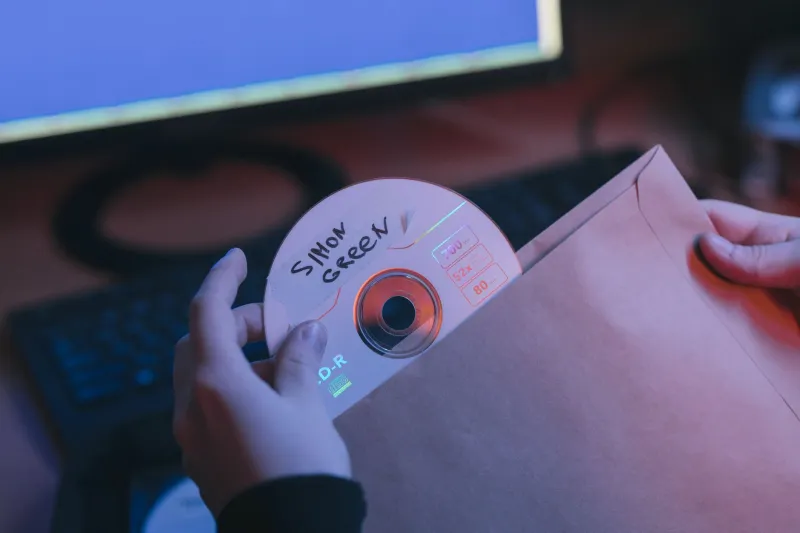
Jordan Reyes still has it. Tucked inside a battered shoebox on the top shelf of her Chicago apartment closet, there's a CD in a jewel case wrapped in notebook paper. The handwriting on the cover is loopy, a little rushed, the kind of penmanship you'd expect from a nineteen-year-old who stayed up too late. The title: For When You Miss Home. Her college roommate made it for her during freshman year, back in 2009. Jordan is thirty-four now. She hasn't owned a CD player in a decade.
"I couldn't even tell you every song on it anymore," she admits. "But I know exactly how it made me feel the first time I listened to it. Like someone had paid very close attention to me."
That feeling — of being seen through someone else's song choices — is exactly what no algorithm has ever quite managed to replicate. Spotify knows your listening history. It knows your mood at 11 p.m. on a Tuesday. But it doesn't know you the way another person does. And that distinction, it turns out, still matters enormously.
The Burned CD Never Really Left
The mix tape had its golden era. The mix CD had its moment in the late nineties through the mid-2000s, when burning software and cheap blank discs made music curation accessible to basically everyone with a laptop and a crush. Then streaming arrived, and for a while it seemed like the whole ritual was going the way of the video rental store.
Except it didn't.
Ask around and you'll find people who still burn CDs for road trips, for breakups, for new babies, for friends going through chemotherapy. You'll find people who have graduated to vinyl selections — pulling records from their own collections and presenting them to someone like a small inheritance. And increasingly, you'll find a generation of younger music lovers who are printing out Spotify playlist QR codes, writing liner notes by hand, and mailing the whole package to someone they love.
The format changes. The impulse doesn't.
"There's something about the constraint of it," says Marcus Webb, a thirty-one-year-old musician and music teacher based in Austin, Texas, who still makes mix CDs for close friends. "When you're burning a disc, you have eighty minutes. That's it. Every choice you make is a real choice because something else doesn't make the cut. That limitation forces you to be honest about what you actually want to say."
What Sequencing Actually Communicates
Anyone who's ever agonized over track order understands that a music compilation isn't just a list of songs you like. It's a small narrative. It has an arc. The opening track sets a tone. The closer lands the emotional punch. The song in the middle that nobody knows is the one that says the most about who you are.
Marcus talks about sequencing the way some people talk about writing a short story. "You're not just sharing music. You're arranging an experience. You're deciding what feeling you want someone to move through, and in what order. That's craft."
Nicole Tran, a graphic designer in Portland, Oregon, took the craft element literally. Last year she made a Spotify playlist for her best friend's birthday and spent two evenings designing a printed insert — song titles, a few sentences about why each track made the cut, a small illustration for the ones that felt especially personal. She mailed it with a QR code.
"She called me crying," Nicole says. "Not because the songs were sad. Just because she could tell how much time I'd spent thinking about her."
That's the part that streaming can't shortcut. Time. Attention. The evidence that someone sat with the question of who you are long enough to find seventeen songs that answered it.
The Vulnerability Nobody Talks About
Here's what gets glossed over in the nostalgia around mix CDs: making one is genuinely nerve-wracking. You are handing someone a document of your inner life and saying, implicitly, this is how I hear the world, and I think you might hear it this way too.
What if they don't? What if they listen once and forget about it? What if they think your taste is weird?
"It's so much more exposing than just recommending a song," says Jordan. "When you make a whole thing for someone, you can't pretend it's casual. The effort is right there. You've made yourself kind of ridiculous in the best way."
That vulnerability is part of why the gesture still lands so hard when it's done well. It's a form of creative expression that's also a declaration — I know you, I've thought about you, I wanted to make something that was only for you.
In an era when so much of what we share is ambient and frictionless — a tagged meme, a forwarded link, a reaction emoji — the deliberate effort of curation reads almost like a radical act.
When the Songs Do the Talking
Not everyone is comfortable saying "I love you" or "I'm sorry" or "I'm scared for you" out loud. Music has always been a workaround for that. A proxy language for the things that get stuck in the throat.
Derek Osei, a twenty-six-year-old based in Atlanta, made a playlist for his dad after his parents' divorce. He's never talked to his father directly about how hard that period was. But he sent him a playlist. Thirty-two songs. No explanation.
"He texted me three days later and just said, 'I felt every single one of those,'" Derek recalls. "That was the whole conversation we needed to have and couldn't have any other way."
This is music curation at its most essential — not as a romantic gesture or a nostalgic throwback, but as a genuine emotional language. A way of saying something true when direct words feel too exposed or too clumsy.
Making Something That Outlasts the Moment
Jordan's CD from her college roommate is, by any practical measure, useless. She can't play it. The songs are all on streaming now. She could reconstruct the playlist in four minutes.
But she's kept the physical object for fifteen years because it isn't really about the songs. It's about the fact that someone made it. That someone sat down with the specific project of thinking about her — her homesickness, her new-city anxiety, her taste in music — and turned that thinking into something tangible.
That's the thing algorithms will never crack. Not because they can't learn your preferences, but because they have no one on the other end doing the caring. There's no person behind the recommendation, no one who stayed up late choosing between two songs and picked the one that felt more true.
And in 2025, with so much of our cultural life mediated by recommendation engines and engagement metrics, that human presence inside a stack of songs feels more meaningful, not less.
So if you've been meaning to make something for someone — burn the disc, print the liner notes, pull the records from your shelf. Thirteen songs. Eighty minutes. One person you want to really see.
It's still one of the best things you can do.