Send Song: Why Making Someone a Playlist Is the Most Vulnerable Thing You Can Do
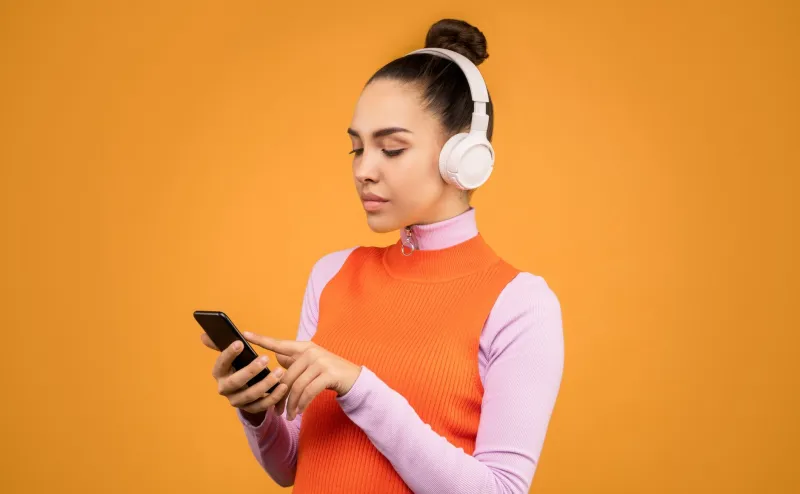
Somewhere between the third and fourth song, you'll always second-guess yourself. Does this track say too much? Does the order make sense? Will they actually get what you were going for with that deep cut from a 2009 indie album nobody else remembers?
This is the particular anxiety of the modern playlist maker — and millions of people are living it.
What started as a cassette tape ritual in the '80s and '90s has quietly evolved into one of the most emotionally loaded creative acts of our digital era. We're not just queuing up songs anymore. We're writing letters. We're making portraits. We're saying things out loud — through someone else's words and melodies — that we can't quite manage on our own.
The Mixtape Never Really Went Away
Let's give credit where it's due. The mixtape was always personal. Ask anyone who spent three hours hunched over a dual-cassette deck in their childhood bedroom, timing the record button just right so the song didn't cut off. That was labor. That was love.
The format changed, but the impulse didn't. CDs gave way to burned playlists. iTunes libraries gave way to shared Spotify links. What remained constant was the underlying instinct: I want you to hear what I hear. I want you to feel what I feel.
Today, platforms like Spotify, Apple Music, and Tidal have made the mechanics easier — but in a strange way, that's made the emotional stakes higher. When it takes three minutes to throw a playlist together, choosing to spend three hours on it means something. The effort is invisible to the recipient, which means the maker has to trust that the care will come through anyway. That's a leap of faith.
A Language for the Things We Can't Say
Ask a millennial or Gen Z music lover about a playlist they've made for someone, and watch their face do something complicated. There's usually a pause. A small smile. Sometimes a wince.
That's because playlists function as emotional shorthand in a way that direct conversation often doesn't. Picking a Phoebe Bridgers song for someone isn't a casual move. Neither is opening with something raw and then pivoting to something hopeful. These are choices with subtext. The sequence tells a story. The genre shifts communicate mood. Even the playlist title — if you're brave enough to give it one — is a kind of confession.
For people who struggle to articulate big feelings — and let's be honest, that's most of us — music becomes a proxy. You don't have to say I've been thinking about you constantly if you can just send someone a 47-minute playlist that opens with a Novo Amor track and ends with Frank Ocean. They'll understand. Or they'll ask. Either way, you've started something.
The Art of the Sequence
Here's what separates a casual playlist from a curated one: intention.
Anyone can dump 20 songs they like into a folder. The art form kicks in when you start thinking about movement — how one song leads into the next, how the energy rises and falls, how the whole thing lands like a complete thought rather than a random shuffle.
Some playlist makers treat it almost like film editing. They consider tempo, key changes, lyrical themes, emotional weight. They'll place a quiet, searching song right before a loud cathartic one because the contrast earns something. They'll end on something unresolved because the relationship they're making the playlist for is also unresolved, and that honesty feels important.
This is, genuinely, a creative skill. And it's one that doesn't get nearly enough recognition.
There are entire Reddit communities, TikTok accounts, and Discord servers dedicated to the craft of playlist curation. People share their sequencing logic, debate whether certain songs belong together, and yes, occasionally post the playlists they made for people who will never know they exist. That last part — the playlists that never get sent — might be the most poignant corner of the whole phenomenon.
When the Playlist Goes Both Ways
One of the more beautiful evolutions in this space is the collaborative playlist. Spotify lets two people add to the same list, which sounds simple but can turn into something weirdly intimate over time.
Couples do this. Best friends do this. Siblings separated by distance do this. You add a song, they add a song, and slowly you're building a shared document of your relationship — a running record of what you were both listening to when, what you were going through, what you wanted the other person to know about where you were emotionally at 11pm on a Tuesday.
Some people treat these collaborative playlists like journals. Others see them as a kind of ongoing conversation. Either way, it's a creative act that belongs to both people. That's rare and kind of wonderful.
Why This Moment Feels Different
It's worth noting that this renewed obsession with intentional, handcrafted musical expression is happening at the same time that people are reaching for vinyl records, shooting on film cameras, and writing actual letters on actual paper. There's a pattern here.
When everything is instant and infinite, the deliberate act of choosing — of slowing down and saying, out of all the songs ever recorded, these are the ones I want you to hear — becomes meaningful in a way it wasn't before. Scarcity creates value, even when it's self-imposed.
A playlist made with care is, in its own way, a resistance to the algorithm. Streaming services want to auto-generate your listening experience based on data. The human playlist maker is doing something the algorithm can't: making choices rooted in specific knowledge of a specific person, laced with specific feeling. That's irreplaceable.
The Courage in the Share Button
Here's the thing nobody talks about enough: sending someone a playlist is brave.
You're handing them a window into your taste, your emotional state, your associations, your inner world. You're saying, in effect, this is what lives inside me, and I think you might understand it. That's exposure. That's risk.
And when it lands — when the other person listens all the way through and texts you about the third track because they felt it too — that's connection in its purest form. Not filtered through small talk or social performance. Just two people meeting somewhere inside a piece of music that one of them loved enough to share.
The playlist as love letter has always been with us. We just keep finding new ways to send it.