Grandma's Recipe, Your Phone Camera: How Home Cooks Are Becoming the Keepers of Cultural Memory
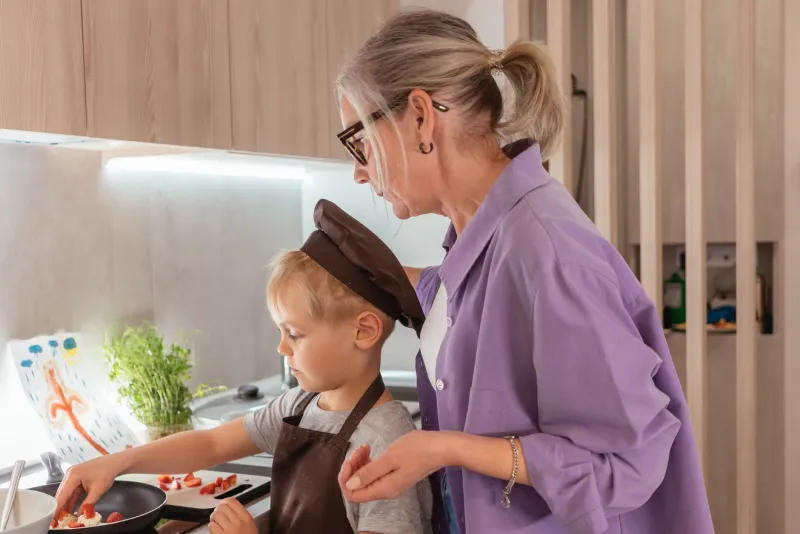
There's a particular kind of panic that sets in when you realize you never wrote it down. The way your grandmother eyeballed the spices. The specific motion of her wrist when she folded the dough. The story she told every single time she made that dish — the one you half-listened to as a kid and now desperately wish you'd recorded.
For a growing number of home cooks across the US, that fear has become fuel. They're turning their kitchens into something closer to cultural archives, blending food prep with photography, video diaries, and handwritten narrative to make sure the flavors — and the stories behind them — don't vanish with the people who carried them.
The Kitchen as a Living Archive
Marisol Reyes, a 34-year-old graphic designer in San Antonio, started filming her mother making tamales three years ago. What began as a casual holiday video has become a sprawling digital project: dozens of clips, annotated recipe cards, and voice recordings of her mother describing the dish's origins in Oaxaca.
"I realized I didn't actually know how to make them," Marisol says. "I just knew how to eat them. And one day I thought — what happens when she's not here? That's when I got serious."
She's not alone. Across TikTok, YouTube, and personal blogs, amateur food documentarians are uploading what they're calling "heritage cooking" content — not polished cooking shows, but intimate, imperfect captures of real family kitchens. The lighting isn't always great. The narration sometimes drifts into childhood memories. That's kind of the point.
More Than Ingredients — It's Identity
Food has always carried culture. But the act of documenting food as culture — treating a family recipe with the same intentionality you'd give a museum artifact — is something different. It's a declaration that this knowledge matters. That it deserves to survive.
For many immigrant families and their American-born children, that declaration carries extra weight. Recipes become one of the few tangible threads connecting generations separated by migration, language barriers, and the relentless pressure to assimilate.
Derrick Osei, a second-generation Ghanaian-American living in Atlanta, spent the better part of last year documenting his father's jollof rice technique. "My dad doesn't measure anything. It's all feel," Derrick says. "So I filmed him maybe eight times, from different angles, trying to reverse-engineer it. Then I wrote it all out and had him correct me."
The result is a 12-page document that Derrick describes as "part recipe, part biography." It includes his father's memories of cooking as a teenager in Accra, the ingredient substitutions they've made over the years using what's available in Georgia, and a note about which American grocery store brands come closest to the originals.
"That document is one of the most valuable things I own," he says.
The Tools Have Never Been More Accessible
Part of what's making this movement possible is pure technology. Smartphone cameras are now good enough to capture close-up cooking detail in real time. Apps like Notion and Google Docs let people build searchable, shareable recipe libraries. Voice memos preserve the oral storytelling that written recipes can't fully capture.
Some home cooks are going further — creating private family YouTube channels, building dedicated websites, or using platforms like Canva to design beautifully formatted recipe booklets they can print and distribute at reunions.
Jade Nguyen, a 28-year-old nurse in Houston, designed a full digital cookbook of her Vietnamese family's recipes as a Christmas gift two years ago. "I sent it to my aunts, my cousins, everyone. People were crying," she says. "My aunt messaged me saying she hadn't thought about a certain soup in thirty years, and seeing it written down brought everything back."
Jade is now working on a second volume, this time with audio recordings of each family member telling a story connected to their dish.
Cooking as Resistance, Cooking as Love
There's a political dimension to this work that practitioners often name directly. When you document a dish that survived colonization, displacement, or cultural erasure, you're doing something more than preserving flavor. You're insisting on visibility.
"My family's food almost disappeared," says Amara Diallo, a Guinean-American home cook and food blogger based in Minneapolis. "When my grandparents came here, they tried to blend in. They cooked American food to fit in, and slowly some of our dishes just... faded. I'm trying to recover what I can."
Amara has spent years calling distant relatives, consulting diaspora cookbooks, and experimenting in her own kitchen to reconstruct dishes she only has secondhand descriptions of. She documents everything — the failed attempts included. "The failures are part of the story," she says. "They show the work. They show that this mattered enough to try."
That ethos — showing the work, honoring the effort — runs through much of this movement. These aren't aspirational cooking accounts chasing aesthetics. They're something rawer and more urgent.
Passing It Forward
What makes this cultural moment feel genuinely new is who's leading it. It's not culinary professionals or food historians (though they're paying attention). It's people in their twenties and thirties who grew up watching their parents and grandparents cook and are now, often with a twinge of grief, realizing that window is closing.
Many of them describe a specific turning point — a death in the family, a move across the country, a holiday meal that tasted slightly off because the person who knew the real version wasn't there anymore. That loss becomes the motivation.
"I started this because I was scared," Marisol Reyes admits. "But now it's become something I actually love doing. My mom and I spend more time in the kitchen together than we ever did when I was growing up. We talk more. I know her better now than I did at twenty."
That might be the most unexpected gift of this whole project: the documentation process itself becomes a form of connection. Asking someone to slow down, to explain, to remember — it opens up conversations that everyday life rarely makes room for.
The dinner table has always been where families gather. Now, increasingly, it's also where they decide what's worth saving — and make sure it doesn't get lost.